
Common Mallow: The Weed Worth Knowing
- Ann Denison
- Jul 14
- 2 min read

If you've ever pulled a sprawling little plant with rounded, scalloped leaves from your garden, chances are you've met Common Mallow (Malva neglecta). Often dismissed as just another weed, this humble plant has been valued for centuries as both food and medicine.
As herbalists, one of the first lessons we learn is to look beyond appearances. Some of our most useful plants are the ones growing right beneath our feet.
Identifying Common Mallow
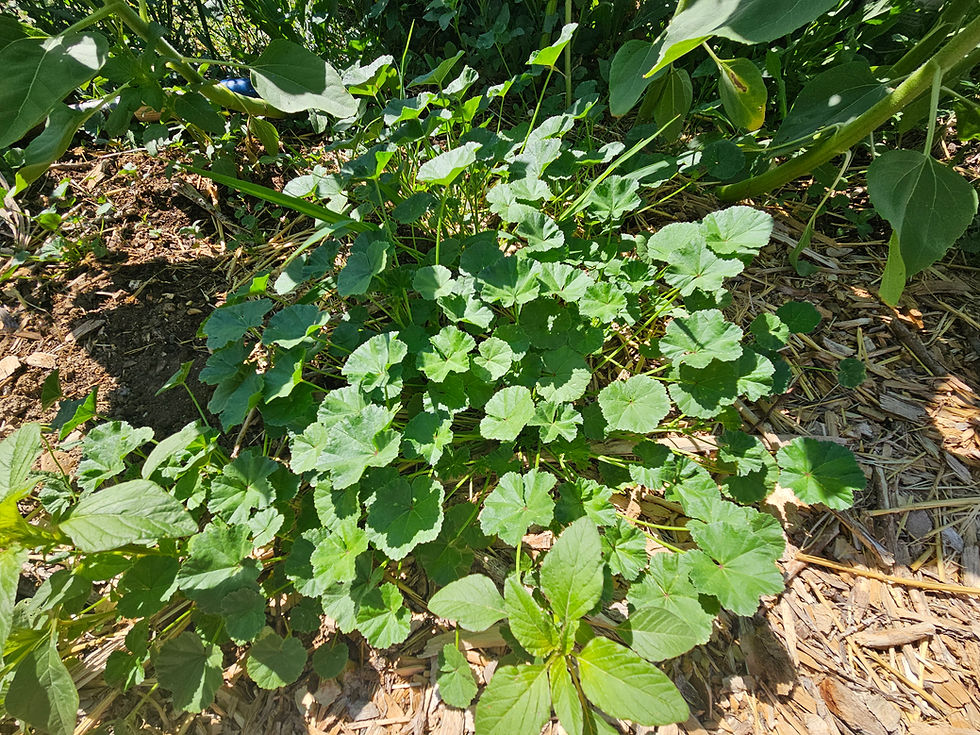
Common Mallow is a low-growing annual or biennial with rounded leaves that have gently scalloped edges and long leaf stems. Its small flowers range from pale pink to lavender and have five petals marked with darker purple veins.
After flowering, the seed pods resemble tiny wheels of cheese, giving the plant its nickname, "cheeseweed."
You'll often find it growing in gardens, disturbed soils, roadsides, vacant lots, and sunny fields throughout much of North America.

Traditional Uses
Common Mallow is best known for its high mucilage content. Mucilage is a slippery, gel-like substance that coats and soothes irritated tissues.
Traditionally, herbalists have used Common Mallow to:
Soothe sore throats
Calm dry, irritating coughs
Ease digestive irritation
Support healthy bowel movements
Cool minor skin irritations and insect bites
Because of its gentle nature, Common Mallow has long been considered one of the safer herbs for the entire family.
Edible as Well as Medicinal
One of the wonderful things about Common Mallow is that it's also edible.
The young leaves can be added to salads, soups, or cooked like spinach. Their mild flavor makes them easy to incorporate into meals, while the natural mucilage adds a pleasant thickening quality to soups and stews.
The flowers are also edible and make a beautiful garnish.
Harvesting
Harvest the young leaves before the heat of summer whenever possible, as they tend to be more tender.
Flowers can be gathered throughout the blooming season.
Dry the leaves in a warm, well-ventilated area out of direct sunlight, or use them fresh when making teas or poultices.
As always, only harvest from areas free of pesticides, herbicides, or roadside contamination, and be certain you've correctly identified the plant before using it.
A Gentle Backyard Ally
Common Mallow reminds us that healing plants don't have to be rare or difficult to find.
Sometimes they're growing quietly between garden rows or along the edge of the driveway, waiting for us to notice them.
The next time you see Common Mallow, pause before pulling it. You may have one of nature's gentlest herbal allies growing right outside your door.
Disclaimer: This article is intended for educational purposes only and is not medical advice. Always consult a qualified healthcare professional before using herbs, especially if you are pregnant, nursing, taking medications, or have a medical condition.


Comments